
🏛️ Knossos Travel Guide: The Labyrinth of the Minoan Civilization
Knossos, the magnificent heart of the ancient Minoan civilization, stands as Crete's most significant archaeological site and one of the most important in all of Greece. Legendarily home to King Minos and the mythical Minotaur's Labyrinth, this sprawling palace complex offers a mesmerizing glimpse into Europe's earliest sophisticated civilization. With its vibrant frescoes, intricate architecture (reconstructed in parts), and a profound sense of ancient mystery, Knossos is an essential journey for anyone eager to explore the roots of European culture.
📍 General Information for Visiting Knossos
- Location: Heraklion, Crete, Greece. Approximately 5 km southeast of Heraklion city center.
- Currency: Euro (€).
- Language: Greek (English is widely spoken at the site and in tourist areas).
- Country Code: +30 (Greece).
- Best Time to Visit:
- Spring (April-May) & Autumn (September-October): Ideal for pleasant weather, beautiful light for photography, and fewer crowds.
- Early Mornings (opening time) or Late Afternoons (2 hours before closing): Best to avoid the peak crowds and the intense midday heat, especially during summer.
- Avoid Midday (11 AM - 3 PM) in Summer (July-August): Can be extremely hot and crowded, making exploration uncomfortable.
- How to Get There:
- By Car: Easy 10-15 minute drive from Heraklion city center. There is a large parking area.
- By Bus: Very frequent public buses connect Heraklion city center (near the port and Liberty Square) directly to Knossos. The journey takes about 20-30 minutes.
- By Taxi: Readily available from Heraklion.
🏛️ History & Mythology: Kings, Labyrinths, and Bulls
Knossos is steeped in the rich tapestry of Minoan history and enthralling Greek mythology:
- Mythology: Most famously, Knossos is linked to King Minos, son of Zeus and Europa, and the terrifying Minotaur, a half-man, half-bull creature confined to a vast Labyrinth designed by Daedalus. The story of Theseus, Ariadne, and the Minotaur is central to its lore.
- Minoan Civilization (c. 2700 – 1450 BC): Knossos was the ceremonial and political center of the Minoan civilization, a highly advanced Bronze Age culture known for its sophisticated art, architecture, and extensive trade network.
- Palace Construction: The first palace was built around 2000 BC, but a major earthquake around 1700 BC led to its reconstruction into the grander "New Palace" we see today.
- Archaeological Excavations: The site was famously excavated by Sir Arthur Evans in the early 20th century, who undertook extensive, and sometimes controversial, restorations and reconstructions based on archaeological evidence.
- Decline: The Minoan civilization at Knossos experienced a sudden decline around 1450 BC, possibly due to a massive volcanic eruption on Santorini, tsunamis, or Mycenaean invasions.
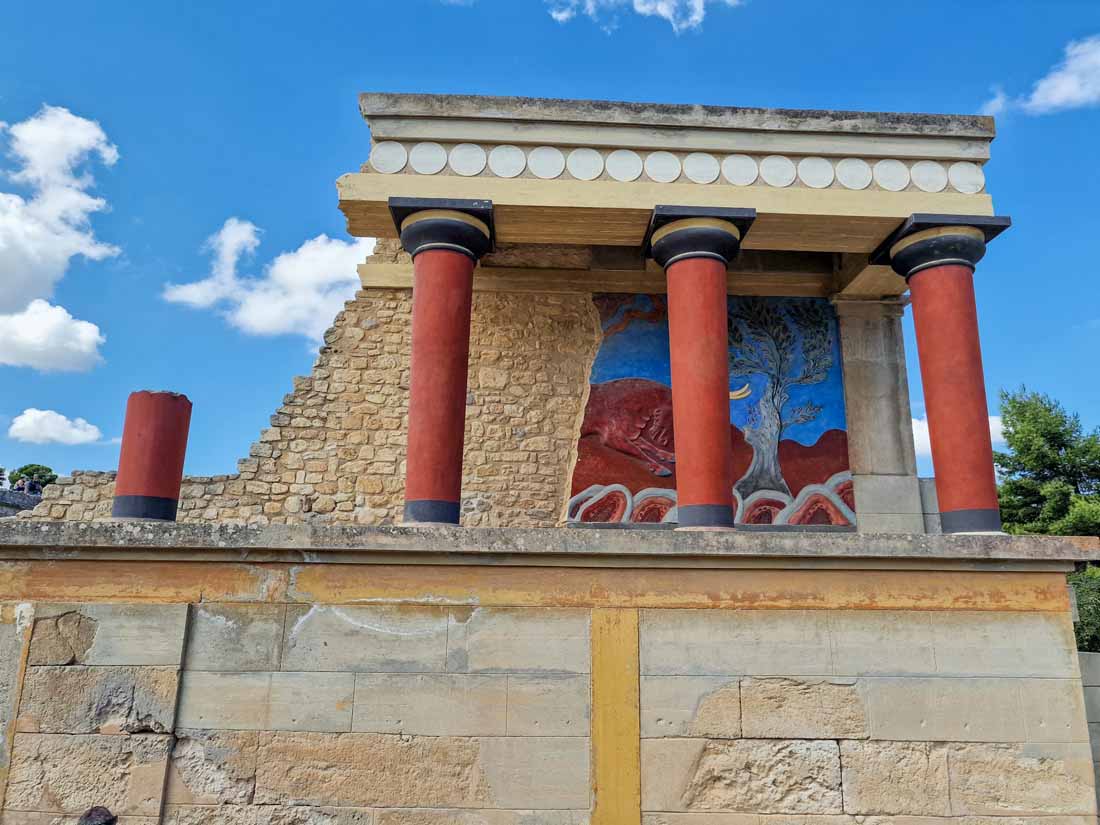
- Fun Fact: The Minoans were renowned for their vibrant frescoes, depicting scenes of daily life, religious rituals, and nature, with a distinctive style that heavily influenced later Greek art. Many original frescoes are displayed at the Heraklion Archaeological Museum!
📍 Key Structures & Areas: Unraveling the Palace Complex
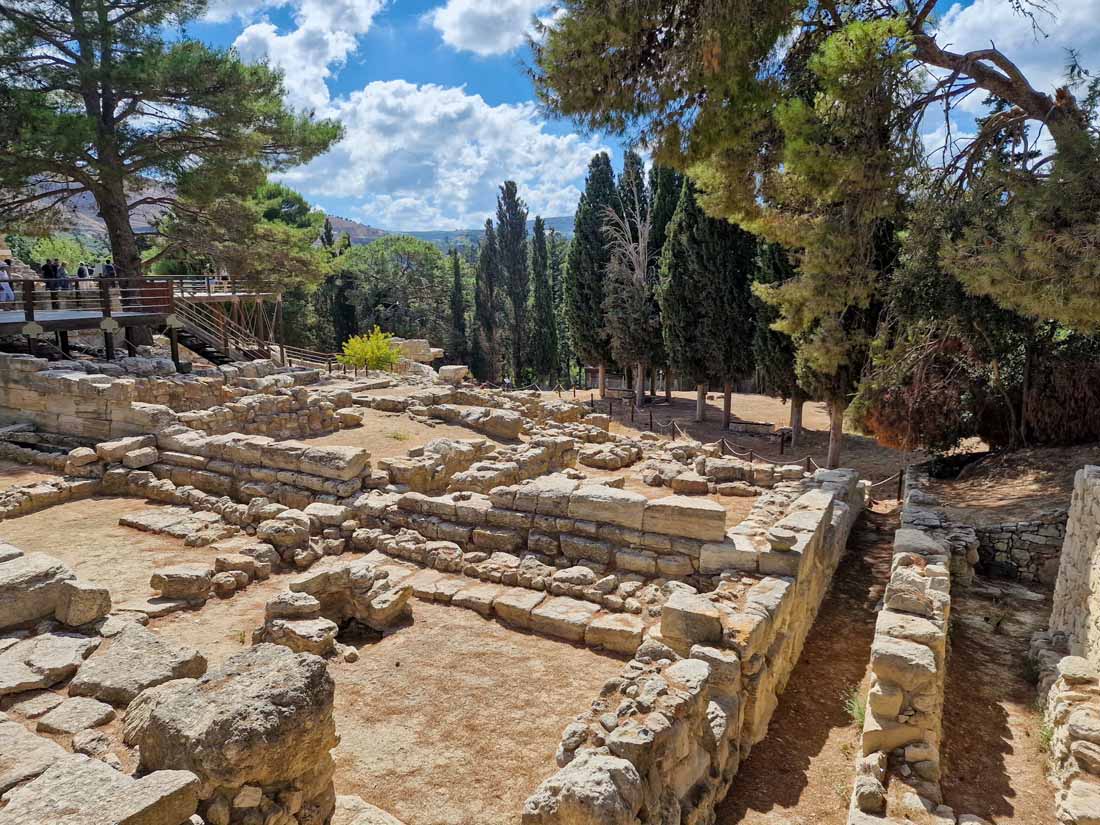
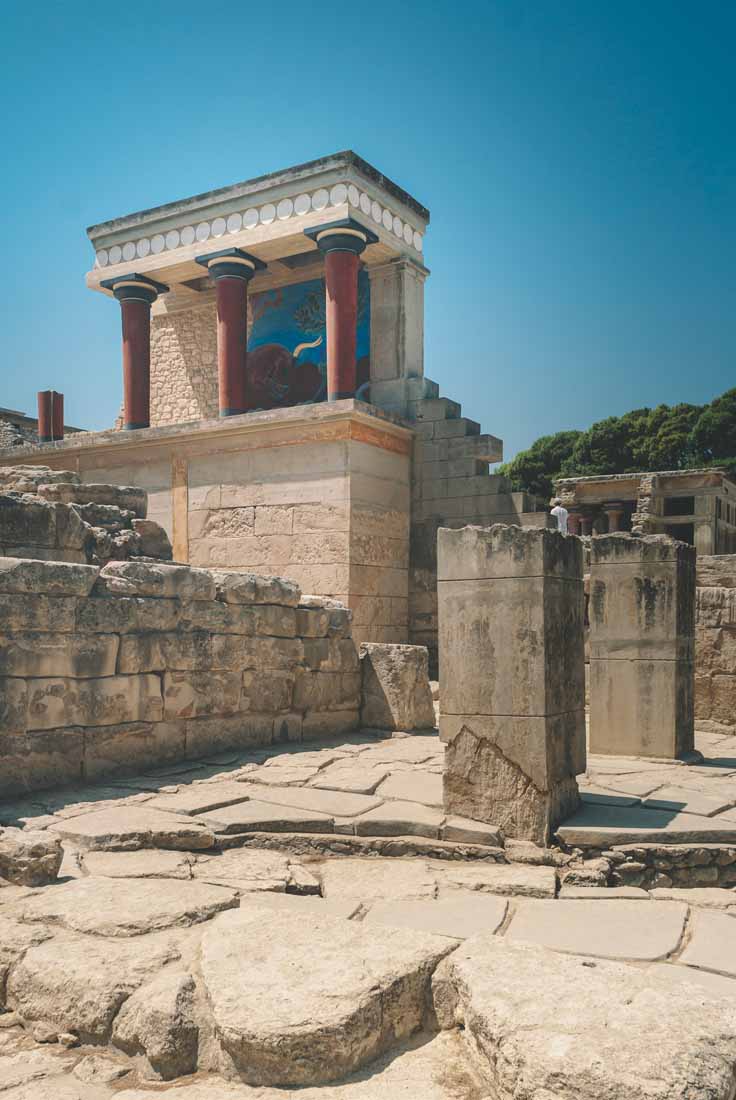
Knossos is a vast site. While some areas are ruins, Sir Arthur Evans's partial reconstructions (using concrete and bold colors) help visualize the original grandeur.
- The West Court: The main ceremonial entrance to the palace, once a grand public space.
- The Propylaea: Monumental gateways leading into the palace's inner sections.
- The Central Court: The heart of the palace, believed to be used for religious ceremonies, public gatherings, and possibly the famous bull-leaping ritual.
- The Throne Room: Perhaps the most iconic preserved chamber, featuring a gypsum throne believed to be the oldest in Europe, flanked by benches and frescoes of griffins.
- The Royal Apartments (Queen's Megaron, King's Megaron): Located in the East Wing, these areas show evidence of sophisticated living quarters, including a flushing toilet and advanced drainage systems. The Queen's Megaron is famous for its dolphin fresco.
- The Storage Magazines (Pithoi): Massive storage rooms in the West Wing, where large clay jars (pithoi) were kept for storing olive oil, wine, and grain, indicating the palace's economic power.
- The Theatre Area: An ancient stepped area outside the palace, possibly used for public performances or gatherings.
- Tip: Wear comfortable, sturdy shoes as the site involves a lot of walking on uneven ancient paths and steps. Bring water, a hat, and sunscreen, especially on sunny days, as there is limited shade.
🏛️ Highlights & Activities: Stepping into the Minoan Past
To truly appreciate Knossos, combine your visit with the outstanding Heraklion Archaeological Museum:
- Explore the Palace Site: Wander through the reconstructed areas and original ruins, trying to imagine the bustling life of the Minoan court. Pay attention to the remnants of multi-story buildings and advanced plumbing.
- Heraklion Archaeological Museum (📍 Google Maps): An absolute must-visit companion to Knossos. Located in Heraklion city center, this museum houses almost all the original frescoes, ceramics, jewelry, and artifacts found at Knossos (and other Minoan sites in Crete). Seeing the originals after visiting the site greatly enhances understanding.
- Guided Tour: Hire a licensed tour guide at the entrance or join a small group tour. Their expertise in Minoan history, mythology, and the site's layout is invaluable for making sense of the ruins and reconstructions.
- Combined Ticket: Consider purchasing a combined ticket that includes entry to both Knossos and the Heraklion Archaeological Museum, offering good value and a complete experience.
- Photography: Capture the unique architecture and colors, but remember to respect the site and other visitors.
🍽️ Nearby Food & Dining: Cretan Flavors
While there are limited dining facilities at the Knossos site itself, the surrounding area and nearby Heraklion offer abundant options:
- Tavernas near Knossos: A few tavernas and cafes are located just outside the archaeological site, offering convenient options for a quick meal or coffee.
- Heraklion City Center: The vibrant city of Heraklion (a short bus or taxi ride away) boasts a fantastic culinary scene with numerous restaurants, tavernas, cafes, and street food options.
- Traditional Cretan Cuisine: Indulge in authentic Cretan dishes, known for their healthy and flavorful ingredients.
- Must-Try: Dakos (Cretan rusk salad), Apaki (smoked pork), local cheeses (graviera, myzithra), fresh seafood, and of course, excellent Cretan olive oil.
- Drinks: Pair your meal with local Cretan wines (unique varieties like Vidiano, Liatiko, Kotsifali) or Tsikoudia/Raki (local spirit).
🛍️ Shopping & Local Products: Minoan Memories and Cretan Delights
Shopping opportunities are available at the site and in Heraklion:
- Site Shop: The official shop at Knossos sells books, replicas of Minoan artifacts, and educational materials.
- Heraklion City Center: Explore the main shopping streets of Heraklion for clothing, jewelry, and souvenirs.
- Local Produce: Purchase high-quality Cretan olive oil, honey, herbs, local cheeses, and raki.
- Art & Handicrafts: Look for unique Cretan pottery, woven textiles, and handmade jewelry.
- Hot Spot: The Heraklion Archaeological Museum shop offers particularly high-quality replicas and books. The central market in Heraklion is great for local food products.
🌿 Hidden Gems & Local Experiences: Exploring Heraklion's Region
- Palace of Phaistos: (Approx. 1-hour drive south) Another significant Minoan palace site, less reconstructed than Knossos but offering a powerful sense of authenticity and dramatic views.
- Gortyn: (Near Phaistos) A vast archaeological site with Roman and early Christian ruins, including the famous Law Code of Gortyn.
- Minoan Villa of Archanes: (Near Heraklion) A smaller, but beautifully preserved Minoan villa site that provides a more intimate glimpse into Minoan life.
- Heraklion City Exploration: Don't just pass through! Explore the Venetian Walls, the Koules Fortress at the harbor, and the vibrant Lions' Square.
- Wine Routes of Heraklion: Visit local wineries in the region around Heraklion to taste the island's excellent wines, particularly those produced from indigenous Cretan grape varieties.
🌍 Sustainable Tourism: Preserving the Minoan Legacy
- Stay on Marked Paths: This is crucial to protect the ancient ruins and prevent further damage.
- No Touching/Climbing: Do not touch the ancient stones, frescoes, or reconstructions, and avoid climbing on any ruins.
- Dispose of Waste Properly: Use designated bins and do not litter at the archaeological site or in surrounding areas.
- Support Local Economy: Choose local tavernas, hotels, and buy products directly from local artisans and producers in Heraklion.
- Manage Your Visit Times: Visiting during off-peak hours or seasons helps reduce overcrowding and stress on the site's infrastructure.
🌟 Practical Tips for Travelers
- Comfortable Shoes: Absolutely essential for navigating the archaeological site, which involves significant walking on uneven surfaces and steps.
- Sun Protection: Wear a hat, sunglasses, and high-SPF sunscreen, as there is very little natural shade at the archaeological site.
- Hydration: Bring plenty of water, especially during hot months. There are limited water sources on the site itself.
- Tickets: Purchase your tickets at the entrance. Consider the combined ticket with the Heraklion Archaeological Museum for a more comprehensive experience.
- Respectful Visit: Remember that Knossos is a profoundly significant historical site. Maintain a respectful demeanor and a quiet voice.

 17°C
17°C


